When “Feeling” Gets Dull
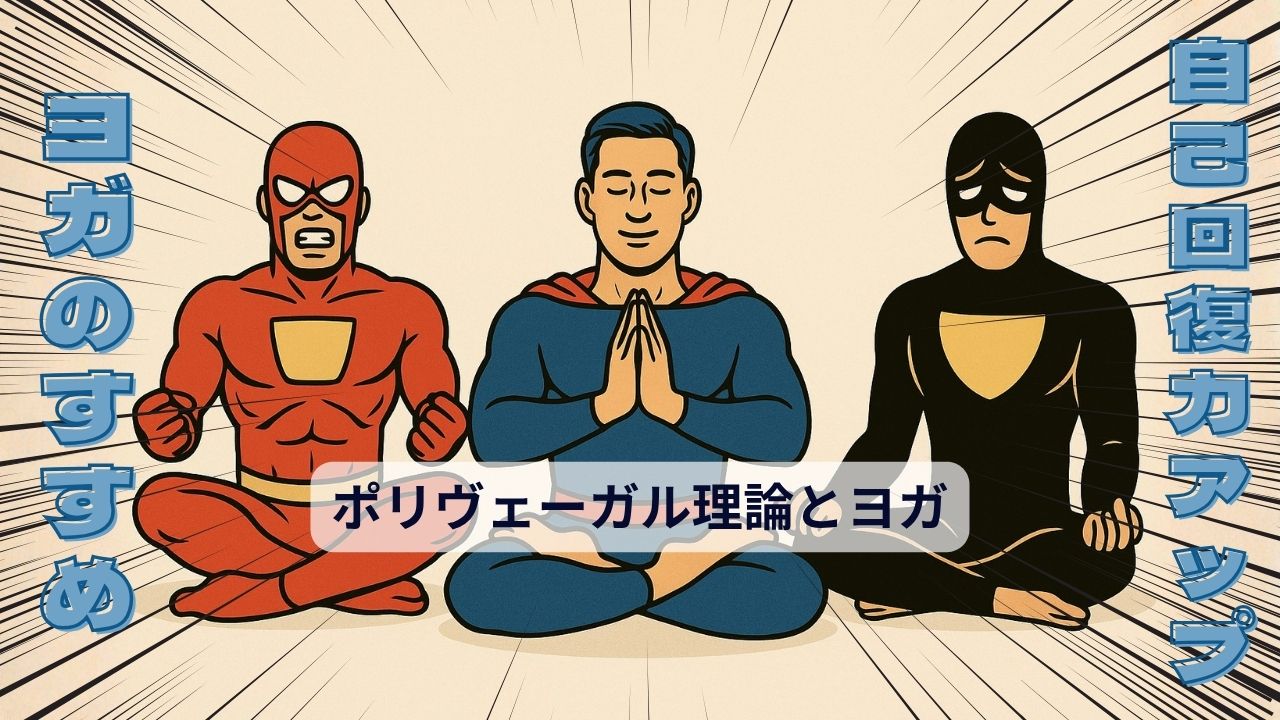
Last time, we introduced Polyvagal Theory and its three autonomic modes: safety, action, and shutdown. But even after getting your body aligned with acupuncture or bodywork, symptoms can creep back in daily life.
There could be many reasons — your self-healing power is low, physical or mental strain is too high — but one possibility is that your ability to feel has become dull.
Today, let’s explore how yoga can help the body and mind recover. Fair warning: this one gets a little academic! (Ha!)
The Science Behind Yoga’s Calming Effect
At our clinic, Chiaki Kurosawa — director of our Maebashi clinic and a yoga practitioner with 22 years of experience — teaches yoga as part of our movement therapy program.
Recent research suggests that yoga’s combination of breathing, movement, and meditation activates the ventral vagus nerve — the nerve responsible for feelings of safety and social connection.
(Reference: “Yoga Therapy and Polyvagal Theory: The Convergence of Traditional Wisdom and Contemporary Neuroscience for Self-Regulation and Resilience” — PubMed)
When the ventral vagus nerve is active, breathing naturally deepens, heart rate settles, and facial expressions and voice become softer. That sense of calm and warmth you feel after yoga isn’t just a mood — it’s a physiological response of your nervous system entering “safety mode.”
I can personally vouch for this: whenever I join a yoga class, I always fall fast asleep during the final Savasana (Corpse Pose)! (Ha!)
Rebuilding Your Inner Sensors
Research from Trauma Sensitive Yoga Netherlands has also shown that regular yoga practice can enhance interoception — your ability to sense your own body’s internal state, including stress responses.
Noticing that your breathing is shallow, or that you’re holding tension somewhere — that awareness alone can help the body begin to regain a sense of safety. This recovery of self-sensing ability is the first step toward self-regulation.
Our Approach to Yoga
What we value most is dialogue with your body.
We always emphasize: the goal isn’t perfecting the pose (asana). What matters is:
– The willingness to try
– The courage to face what you can’t yet do
– Noticing differences between left and right, areas of stiffness, and areas of flexibility
Yoga is time set aside to feel where you are right now. By connecting with your body, your natural healing power begins to stir.
Our yoga classes aren’t specifically based on Polyvagal Theory, but we deeply resonate with the research on how yoga practice benefits body and mind. Knowing the science behind that “ahhh, that felt good!” moment makes it even more effective!
Free Monthly Classes
Treatment time is just a small part of your day. Yoga is a tool we use to support what treatment alone can’t cover.
Our yoga classes are open to everyone — whether you’re a patient at our clinic or not — and they’re held four times a month, completely free.
Check our official LINE for the monthly schedule!
Before You Visit…
Fair warning: our English is a work in progress! (Ha!)
But thanks to the magic of translation apps, we communicate just fine with patients from around the world.
Your body speaks a universal language — and that’s the one we’re fluent in.