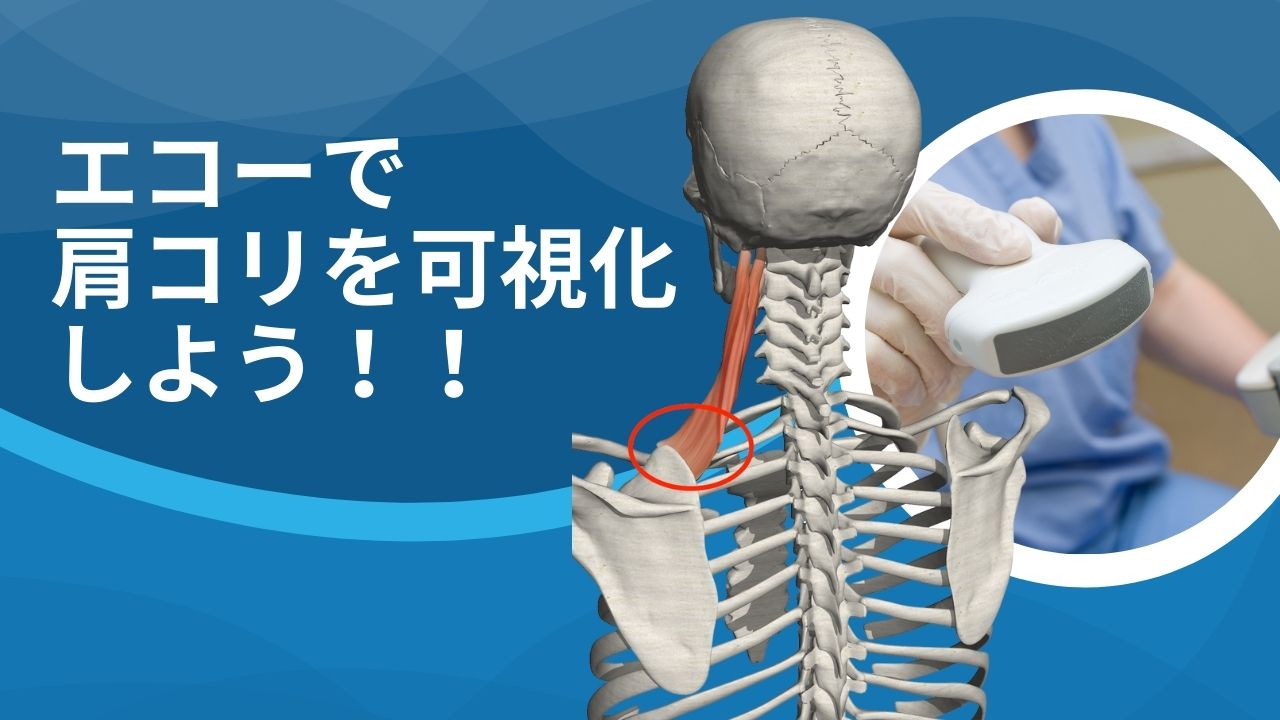
One of the most common complaints we hear from clients is “stiff shoulders” (known as katakori in Japanese).
According to 2022 data from Japan’s Ministry of Health, the most common symptom for men is lower back pain, while for women it’s stiff shoulders.
But what’s actually happening when your shoulders feel stiff? What is that uncomfortable tightness, really?
Looking Inside with Ultrasound
At our clinic, we use ultrasound imaging to find out. We scanned the area where people typically feel shoulder stiffness.
Here’s what the ultrasound looks like for someone without shoulder stiffness — and then for someone with it.
In both images, we’re looking at roughly the same area. But in the second image, you’ll notice the lower portion appears more white and dense.
In simple terms, ultrasound shows harder tissue as brighter white. So the stiff, hardened area shows up as a thick white band — and we believe this is the true identity of shoulder stiffness.
In technical terms, this white area is called “stacking fascia” (fascial densification) — layers of fascia that have become compressed and rigid.
How We Treat It
We use acupuncture to carefully release these fascial layers.
Here’s an interesting detail: just below this area lies the lung, so needling too deep could be dangerous. But because we can see the exact position of the lung on ultrasound, we can safely reach even the deepest layers of stiffness.
Ultrasound is amazing! (Ha!)
Acupuncture is a traditional medicine, but by combining it with modern tools and knowledge, we believe its effectiveness can be taken to the next level.
Before You Visit…
Fair warning: our English is a work in progress! (Ha!)
But thanks to the magic of translation apps, we communicate just fine with patients from around the world.
Your body speaks a universal language — and that’s the one we’re fluent in.